AI ethics

AI ethics that starts with the decisions you’ll actually face.

Hundreds of firms will help you deploy AI, and hundreds more will write your principles. We start somewhere else: with the specific dilemmas your organisation will face in the next 24 months, before they arrive. Then we help you build the framework to decide them.

What we mean by AI ethics.

For us, AI ethics is what you decide your AI may know about people, decide about them and do to them, especially when doing more would pay.

That last clause is the point. AI gives organisations new abilities: to combine data, to predict what individuals will do, to personalise every price and to act without asking. Each ability arrives with a race. If you don’t use it, a competitor will, and their prices, margins and speed become the market’s standard.

Ethics is what you do in that race, not the principles you wrote before it started. So we don’t begin with a theoretical framework. We begin with your next 24 months.

Dilemmas first. Framework second.

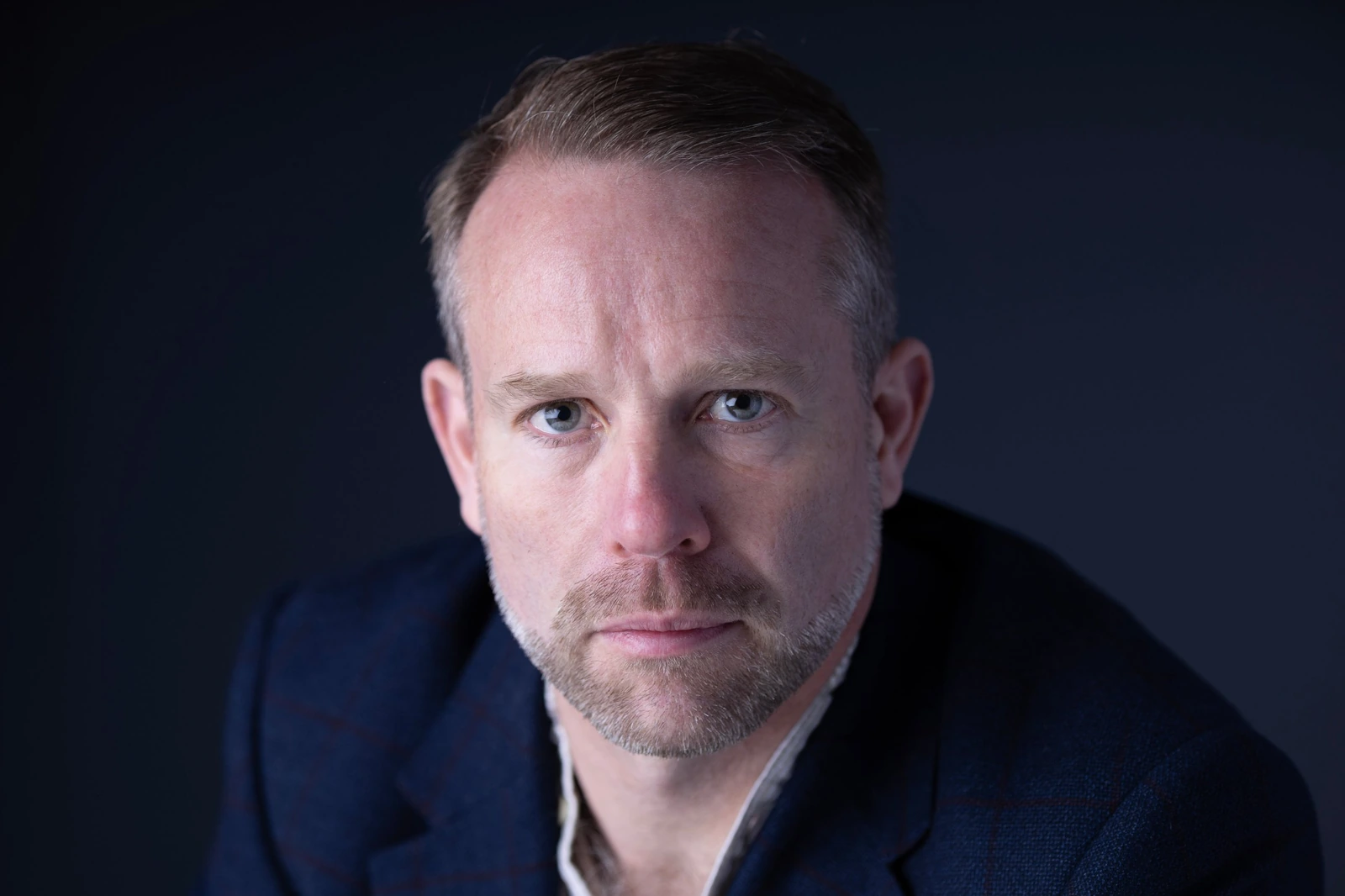
Portrait of Antony Butts

Antony finds the dilemmas.

For more than a decade Antony has worked out how technological and social trends combine and what they make possible, backed by a deep working knowledge of AI and robotics and five years of defence futures at Dstl. He builds the world your organisation is heading into, and finds the specific decisions it will force: who decides, who pays, and what your rivals will do.

Simon Willis

Simon builds the framework.

Simon studied ethics at Oxford, as part of Philosophy, Politics and Economics, and again in his MBA, and has spent thirty years applying it inside governments and global companies. He helps you turn the dilemmas into a framework that holds: red lines, conditions and commitments, who decides what, and how to compete when rivals won’t hold the same line.

How we think a dilemma through.

  1. The capability

    What AI makes newly possible, cheaply and at scale.

  2. The combination

    What it combines with: other data, other systems, other incentives. This is where the surprises come from.

  3. The pull

    Who gains by using it, and what happens to those who don’t. Usually, a race.

  4. The people exposed

    Who bears the consequences, and which of them can’t see or contest what is happening.

  5. The fork

    The decision itself, with a real cost on both sides, and the person who has to make it.

Worked example

A CRM company in an arms race.

A software company sells customer-relationship and office-automation tools to mid-sized businesses. Its competitors have launched AI agents. The board’s message is simple: add AI, or we’re finished.

What arrives in the next 24 months

  • Agents that act: they email, negotiate, discount, renew and chase payment.
  • Enrichment that combines clients’ records with bought-in and scraped data.
  • Predictions about individuals: who will leave, what they will pay, who is in financial trouble.
  • Prices and offers personalised to one person.
  • A vendor model that learns across every client’s data.

The race

Each capability makes clients more money in the short run, and each one a competitor ships becomes the market’s standard. Hold back alone and you lose deals. If everyone ships, end customers end up worse off and the regulators arrive.

The decisions it cannot delegate.

  • What may an agent promise in the company’s name?
  • May knowledge of a customer’s financial distress ever be used against them?
  • Who can challenge a decision—and who has the authority to reverse it?

The framework we would build with them

  1. Autonomy follows reversibility.

    The agent may act alone where a mistake is cheap to undo. Commitments about money, contracts or a person’s access need a human.

  2. A one-way valve on vulnerability.

    Inferences about financial stress may only be used in the customer’s favour: to lower a price, give time or route them to help. Never to raise a price or press harder.

  3. Every decision about a person comes with a reason and a route to a human.

    If the system can’t explain it, it doesn’t do it.

  4. Clients choose who learns from their data.

    Training the shared model is opt-in, and clients are told what they get in return.

  5. Disclosed by default.

    People are told when they are dealing with an AI, and when an AI set their price.

And how it competes

Sell trust where it is worth most: to regulated buyers in finance, health and the public sector, who will have to show that their suppliers comply. Build to the rules before they arrive, and recruit allies for an industry standard, so that holding the line doesn’t mean losing alone.

How to hold a line when rivals won’t.

A framework has to survive competition, not just a board meeting.

  • Make it a product.

    Trust sells, especially to buyers who must prove their suppliers are safe.

  • Set the default.

    Let customers choose, but make the safe option the one they get unless they decide otherwise.

  • Find allies.

    A shared standard turns a costly stand into the market’s rules. Simon has led UK delegations where international standards were made.

  • Move before the rules.

    Regulation tends to follow scandal. Being ready early is cheaper than being retrofitted.

  • Disclose.

    Practices that can’t survive being explained to customers rarely survive being discovered.

  • Pay the price knowingly.

    Some lines are worth losing a deal over. Decide which in advance, not in a sales meeting.

What you receive.

Take one, or all four. Simon and Antony lead each one together.

  • Dilemma map

    Two to three weeks. The specific dilemmas your organisation is likely to face in the next 24 months, with the capability, the pressure and the people affected behind each one.

  • Leadership session

    One day working through the decisions with your leaders. They decide, disagree and find out where they really stand.

  • Decision framework

    Four to six weeks. Red lines, conditions and commitments; who decides what; and how you compete when rivals won’t hold the same line.

  • Six-monthly refresh

    The world moves. We revisit the map, retire the dilemmas you have decided and add the new ones.

GO FURTHER

Request the paper.

Tell us who you are and what you are exploring. Simon and Antony review each request and reply with the material available to share.

Request access →

Discuss a commission.

Tell us the decision you face, what is changing and what your current view may be missing.